Double Chance Bet Meaning: 1X, X2, and 12 Explained
Learn what a double chance bet means in soccer betting, how 1X, X2, and 12 settle, and how double chance compares with moneyline and draw no bet.
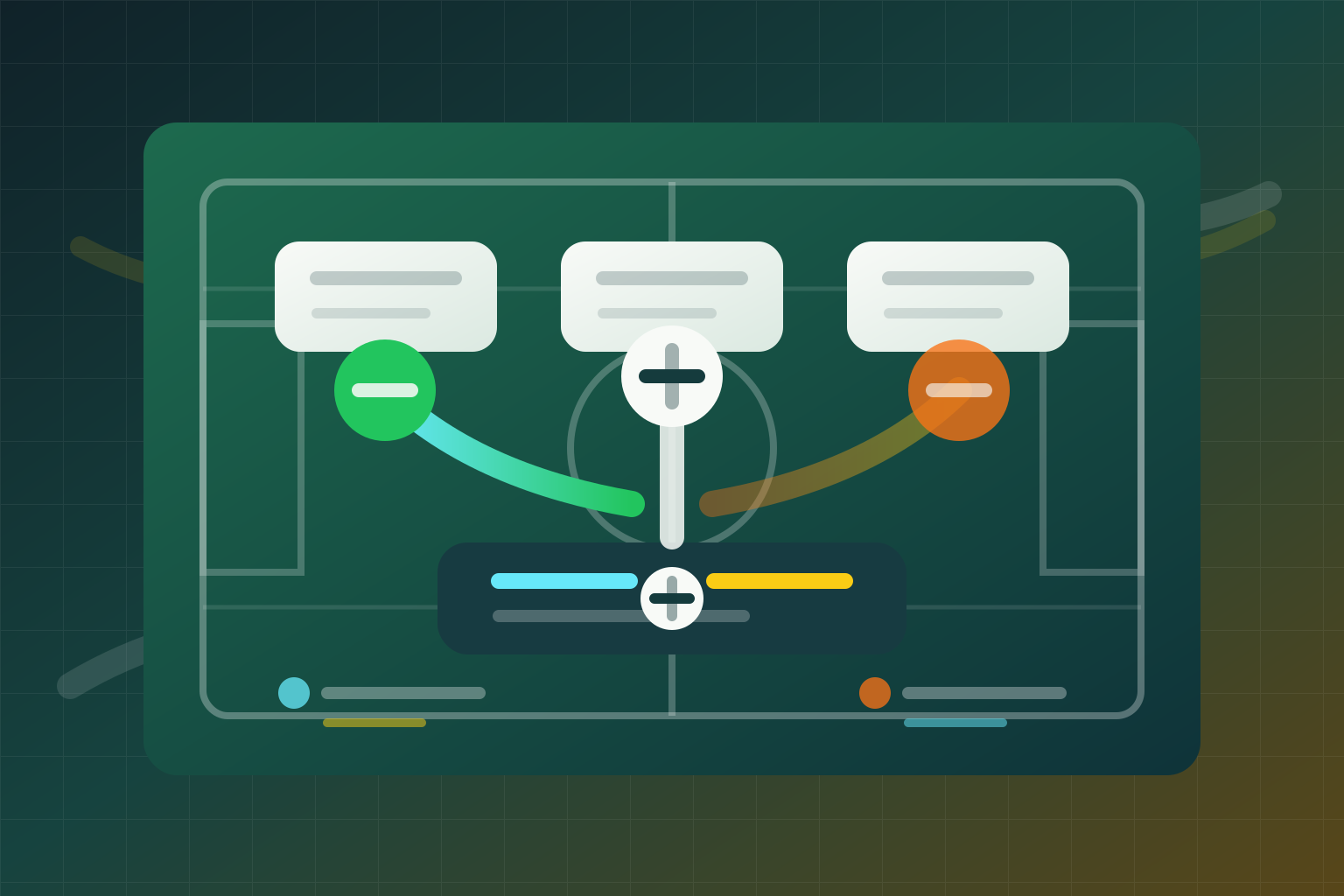
Quick answer: a double chance bet covers two of the three possible outcomes in a market where a draw is possible. In soccer, the three outcomes are home win, draw, and away win. Double chance lets you choose two of them in one selection.
The common labels are:
| Double chance label | What wins | What loses |
|---|---|---|
| 1X | Home win or draw | Away win |
| X2 | Draw or away win | Home win |
| 12 | Home win or away win | Draw |
Double chance is common in soccer because draws are part of the standard match result market. It can also appear in other sports or periods where the listed market allows a tie, but soccer is where beginners usually see it first.
Double chance bet meaning
A double chance bet starts from a three-way market, often called a 1X2 or three-way moneyline.
| 1X2 symbol | Outcome |
|---|---|
| 1 | Home team wins |
| X | Match draws |
| 2 | Away team wins |
Instead of picking one outcome, double chance combines two outcomes:
| Selection | Plain-English version |
|---|---|
| 1X | Home team or draw |
| X2 | Away team or draw |
| 12 | Home team or away team |
That is the whole idea. You are not getting two separate bets. You are making one bet that wins if either included outcome happens.
Because the bet covers more outcomes, the payout is usually lower than a single-outcome moneyline pick. The sportsbook is pricing a selection that has more ways to win and fewer ways to lose.
Double chance betting example
Imagine this soccer match:
| Market | Odds |
|---|---|
| Home win | +140 |
| Draw | +230 |
| Away win | +190 |
| Home or draw double chance, 1X | -220 |
| Draw or away double chance, X2 | -165 |
| Home or away double chance, 12 | -310 |
If you bet 1X, your result depends on the final score:
| Final score | 1X result | Why |
|---|---|---|
| Home wins 2-1 | Win | Home win is included |
| Match draws 1-1 | Win | Draw is included |
| Away wins 1-0 | Loss | Away win is the only excluded outcome |
If you bet X2, the home win is the excluded outcome. If you bet 12, the draw is the excluded outcome.
The exact odds change by match, team strength, league, and sportsbook margin. The settlement logic stays the same: your covered outcomes win, and the uncovered outcome loses.
What do 1X, X2, and 12 mean?
The symbols come from the three possible match outcomes.
| Symbol | Meaning |
|---|---|
| 1 | Home team |
| X | Draw |
| 2 | Away team |
So 1X means home or draw. X2 means draw or away. 12 means home or away.
This notation can feel strange if you are used to American moneyline labels. A helpful way to read it is:
| Label | Say it as |
|---|---|
| 1X | ”Home team does not lose” |
| X2 | ”Away team does not lose” |
| 12 | ”The match does not draw” |
That wording is useful, but do not let it make the bet sound safer than it is. A 1X bet can still lose if the away team wins. A 12 bet can still lose on a 0-0, 1-1, or any other draw.
Double chance vs moneyline
A moneyline bet usually asks you to pick one winner. In soccer, a three-way moneyline asks you to choose home win, draw, or away win.
Double chance covers two of those outcomes:
| Final score | Home moneyline | Home or draw, 1X |
|---|---|---|
| Home wins 2-0 | Win | Win |
| Match draws 1-1 | Loss | Win |
| Away wins 1-0 | Loss | Loss |
The tradeoff is price. If the home team is +140 on the three-way moneyline, the home-or-draw double chance may be negative odds because it includes the draw as a second winning outcome.
That lower payout is not a flaw in the board. It is the market pricing the extra coverage.
Double chance vs draw no bet
Draw no bet and double chance both deal with the draw, but they handle it differently.
| Market | If your team wins | If match draws | If your team loses |
|---|---|---|---|
| Home draw no bet | Win | Usually void/refund | Loss |
| Home or draw double chance, 1X | Win | Win | Loss |
That draw result is the key difference. Draw no bet usually returns the stake on a draw. Double chance can make the draw a winning outcome if the selected combination includes it.
Because of that, 1X often pays less than the same team draw-no-bet price. You are asking for the draw to win rather than just refund.
Double chance vs pick’em
A pick’em in betting usually means the spread is zero, or neither side is clearly favored. A pick’em can push if the teams finish level, depending on the sport and market.
Double chance is different:
| Term | Main idea |
|---|---|
| Pick’em or PK | No point spread between the teams |
| Draw no bet | Pick a team; draw usually refunds |
| Double chance | Cover two of the three outcomes |
In soccer, a 0.0 handicap, pick’em, and draw no bet can look similar because the draw may refund. A double chance selection that includes the draw does not usually refund on a draw. It wins.
When the labels get crowded, ask one practical question: what happens if the match draws? The answer separates these markets quickly.
Does double chance include extra time?
Usually, a soccer double chance bet is settled on regular time plus stoppage time, not extra time or penalty shootouts. In standard soccer rules, the match is played in two 45-minute halves plus allowance for time lost.
That period detail matters in knockout matches.
| Score path | Common regular-time double chance result |
|---|---|
| Match is 1-1 after 90 minutes plus stoppage time | A 1X or X2 selection wins because draw is included |
| Same match has an extra-time winner | Standard regular-time double chance is usually already settled |
| Market says “to qualify” instead | Different market; settlement follows the qualification result |
Always check the market label. A sportsbook can offer first-half double chance, regular-time double chance, live double chance, or another period-specific version. The label controls the settlement.
Why double chance odds are lower
Double chance odds are usually shorter because the bet has more winning outcomes.
Suppose the market view is:
| Outcome | Simple implied probability |
|---|---|
| Home win | 40% |
| Draw | 28% |
| Away win | 32% |
Before adjusting for margin, a home-or-draw style selection is built from the home win plus the draw:
| Double chance selection | Covered outcomes | Combined simple probability |
|---|---|---|
| 1X | Home win + draw | 68% |
| X2 | Draw + away win | 60% |
| 12 | Home win + away win | 72% |
Those probabilities are higher than any single outcome, so the payout is lower. A lower payout does not automatically mean bad value, and a higher chance of winning does not automatically mean good value. The price still includes vig, and the market can still be overpriced.
Is double chance safer?
Double chance has fewer losing outcomes than a single three-way moneyline pick, but it is not safe or guaranteed.
The word “chance” can be misleading. A home-or-draw bet still loses if the away team wins. An either-team-to-win bet still loses if the match draws. The lower payout can also make a losing streak harder to recover from if you increase stakes after losses.
Use “less exposed to one outcome” instead of “safe.” That framing is more accurate.
Common beginner mistakes
Mistake 1: Thinking double chance is two separate bets
It is one bet with two covered outcomes. If 1X wins on a draw, you do not get paid separately for the home outcome. The settlement is one winning selection.
Mistake 2: Confusing 12 with over/under
The 12 selection is about the match result, not goals. It wins if either team wins and loses if the match draws. It has nothing to do with whether the match goes over or under a goals total.
Mistake 3: Ignoring the listed period
A first-half double chance and a full-match double chance are different markets. A regulation-time market and a “to qualify” market are also different. Read the period before you assume a result.
Mistake 4: Treating short odds as free money
Double chance selections often sit at negative odds because they cover two outcomes. Short odds can still lose, and the payout may not justify the risk if the market is heavily juiced.
When double chance is easiest to understand
Double chance is easiest when you can name the only result that beats you:
| Bet | Only losing result |
|---|---|
| 1X | Away team wins |
| X2 | Home team wins |
| 12 | Match draws |
If you cannot identify the one excluded outcome, slow down before placing the bet. That is especially true for live betting, parlays, special soccer markets, and any event with extra time or shootout rules.
For broader terminology, the sports betting terms for beginners glossary is a useful next step.
FAQ
What does double chance mean in betting?
Double chance means one bet covers two of the three possible outcomes in a draw-eligible market. In soccer, that usually means home or draw, away or draw, or either team to win.
What does 1X mean in betting?
1X usually means home win or draw. The bet wins if the home team wins or the match draws, and it loses if the away team wins.
What does X2 mean in betting?
X2 usually means draw or away win. The bet wins if the match draws or the away team wins, and it loses if the home team wins.
What does 12 mean in betting?
12 usually means home win or away win. It wins if either team wins and loses if the match ends in a draw.
Is double chance better than draw no bet?
Neither is automatically better. Double chance can turn the draw into a win if your selection includes it, while draw no bet usually refunds on a draw. The better market depends on the price, settlement rules, and your own probability estimate.
Sources
- Action Network: Double chance soccer definition, 1X/X2/12 examples, and regular-time caveat.
- WagerTalk: Soccer double chance explanation and lower-payout tradeoff.
- BettingUSA: Three-way moneyline relationship, notation, and odds/probability discussion.
- Sportsbet Help Centre: Double Chance and Draw No Bet soccer market settlement notes.
- IFAB: Standard match duration context for regulation-time soccer markets.
- National Council on Problem Gambling: Help and treatment resources.
Responsible betting
This guide explains betting terminology, not a prediction or betting recommendation. Double chance can reduce exposure to one match outcome, but every wager can still lose and shorter odds can hide poor value. Bet only where it is legal for you, risk only money you can afford to lose, and avoid increasing stakes to recover losses. If betting stops feeling controlled, consider taking a break and using confidential support resources from the National Council on Problem Gambling: https://www.ncpgambling.org/help-treatment/